Category: Personal Reflection

  • Apple and its Values

    Apple and its Values

    People often assume my criticism of Apple is about the products. It is not. There are countless products on the market that I dislike, find overpriced, or have no interest in using. I do not lose sleep over their existence. People should be free to make their own choices, including choices I would not make.

    My concern is that Apple has become one of the most influential companies in shaping how technology is designed, owned, controlled, and experienced. The values embedded in Apple’s products increasingly shape the expectations of the entire industry. What troubles me is the worldview behind it.

    Advertisement

    It Started with a Macintosh

    My skepticism began long before smartphones, app stores, or cloud services. In the early 1990s, someone asked me to help troubleshoot a problem on a Macintosh. Coming from an MS-DOS background, my instinct was straightforward: inspect the system, verify the settings, identify the cause, solve the problem.

    Instead, I found a machine that seemed unwilling to reveal how it worked. The information I wanted was hidden. The settings I expected to find were inaccessible or obscured. I could not understand the system because the system did not want to be understood.

    Looking back, that first encounter exposed a philosophical difference that has stayed with me ever since. I view computers as tools that users should be able to understand. Apple views computers as products that should shield users from complexity.

    The Philosophy of “We Know Better”

    At the heart of Apple is a simple idea: the company knows better than its users. This philosophy has been present since the days of Steve Jobs and continues to shape the company today.

    Advertisement

    Apple decides which software can run on your device. Apple decides which applications may enter its ecosystem. Apple decides how you repair your hardware, how you access your content, and increasingly how you interact with your own data. Supporters call this curation. I call it paternalism.

    The assumption behind many Apple decisions is that users should be protected from complexity, risk, and sometimes from themselves. The result is a technology ecosystem where consumers are treated less like owners and more like participants in a carefully managed environment.

    Quality Through Control

    One of the most common defenses of Apple is product quality. Apple’s supporters often point to integration, reliability, and design quality as evidence that the company’s approach works.

    I see the same products differently. The very controls that many users experience as simplicity often feel restrictive and frustrating to me. Quality becomes easier when you control the hardware, the operating system, the application marketplace, and the repair ecosystem. Quality becomes easier when competing approaches are excluded.

    That Apple succeeds at this is not in dispute. What I dispute is the conclusion many draw from it: that control is therefore justified. A highly optimized product is not ethical proof of the philosophy that produced it. It simply demonstrates that centralized control can manufacture profitable outcomes at the cost of user autonomy.

    The same logic applies to security. Apple’s ecosystem is more secure partly because users are prevented from making certain choices. For some people, that is a reasonable trade-off. For me, it raises a more important question: should security be achieved by limiting agency?

    Advertisement

    Batterygate and the Problem of Incentives

    One of the most revealing episodes in Apple’s history was the battery throttling controversy. The engineering explanation may have been legitimate, but Batterygate was not primarily a technical failure. It was a failure of transparency.

    Apple made decisions affecting devices people owned without providing the information necessary for informed consent. Effectively, it encouraged users to upgrade or replace. Whether the outcome was intentional or incidental is almost beside the point. The episode demonstrated a willingness to prioritize management of the user experience over the user’s right to understand what was happening to their own property.

    The Open-Source Question

    Years ago, I was involved in implementing Moodle, one of the world’s most widely used open-source learning management systems. One recurring challenge was integrating Apple’s ecosystem with a platform built around openness, interoperability, and community collaboration.

    What struck me was not simply the technical friction of trying to make an open, collaborative platform function smoothly inside a locked-down environment. It was that Apple seemed far more interested in preserving the integrity of its own ecosystem than in supporting open, community-driven initiatives.

    Open-source communities generally begin with the assumption that technology should be transparent, adaptable, and collectively improved. Apple begins with the assumption that technology should be curated, controlled, and centrally managed. These are fundamentally different visions of how technology should relate to its users.

    The Slow Death of Ownership

    Perhaps my greatest concern is Apple’s role in normalizing a world where ownership is replaced by access. Technology once allowed people to own their software, music, and media outright. Increasingly, consumers merely license them. Content can disappear. Services can be discontinued. Accounts can be suspended. Entire digital collections can become inaccessible overnight.

    Apple did not create this trend alone, but it helped legitimize and accelerate it. The company demonstrated that consumers could be transformed from owners into subscribers, from customers into permanent tenants. Much of a person’s digital life now exists only through continued permission from a corporation. Most people accepted this transition so gradually that they barely noticed it happening.

    The Hypocrisy Problem

    What ultimately makes Apple difficult to accept is the gap between its image and its reality. Apple presents itself as progressive, ethical, creative, and human-centered. Its marketing emphasizes individuality, empowerment, and social responsibility.

    This rhetoric, however, stops where the physical manufacturing begins. Apple’s business model is built on the premise that centralized control produces superior outcomes. Yet when confronted with labor abuse, predatory working hours, or environmental hazards in its supply chain, the company’s philosophy suddenly shifts. When convenient, Apple emphasizes the independence of third-party suppliers and the strict limits of its corporate responsibility.

    Advertisement

    The contradiction is difficult to ignore. A company capable of controlling the smallest details of product design, which software you are allowed to install, and ecosystem participation, clearly possesses significant leverage over the conditions under which its products are made. They choose total control over the software, but less control when it comes to the human supply chain.

    Apple’s Philosophy Became a Blueprint

    My concern today extends well beyond Apple. What troubles me is how much of the technology industry has adopted the same assumptions.

    For decades, Microsoft represented a different philosophy. Imperfect, expensive, often frustrating, sometimes chaotic, but a platform that generally allowed users, developers, and hardware manufacturers considerable freedom. Over time, Microsoft has moved steadily toward cloud dependency, subscription, account requirements, telemetry, and managed experiences.

    The company has not become Apple, but it has clearly learned from Apple’s success. The lesson it appears to have taken is that control is profitable. The result is an industry that increasingly assumes users should be guided rather than empowered, licensed rather than allowed to own, and managed rather than trusted.

    Advertisement

    The Real Debate

    Apple’s defenders and critics often have different conversations. Supporters point to convenience, integration, simplicity, and security. Critics point to autonomy, ownership, openness, and repairability. Both sides frequently describe the same features.

    The difference lies in which values they prioritize. Apple’s success shows that many people are willing to exchange autonomy for convenience. An exchange that often takes place without fully recognizing the trade-off.

    I understand that choice. I simply don’t share it. For me, technology should not merely work well. It should be understandable. Designed to empower participation rather than encourage dependence. It should treat users as capable individuals, honoring our fundamental need for agency within causation, rather than treating us as consumers to be managed.

    A company that chooses total control over the product it ships, but limited responsibility for the people who make it, has told you exactly what it values.

    AI Transparency Statement: The author defined all core concepts, direction, and parameters for this work. In the writing of this article, AI assisted in drafting some text, conducting research, and correcting grammar. The AI tools used include ChatGPT, Claude, and Gemini. All AI-generated content was thoroughly reviewed and verified for accuracy and appropriateness. The final work reflects human judgment, expertise, and experience.

  • The Weight of Invisible Things

    The Weight of Invisible Things

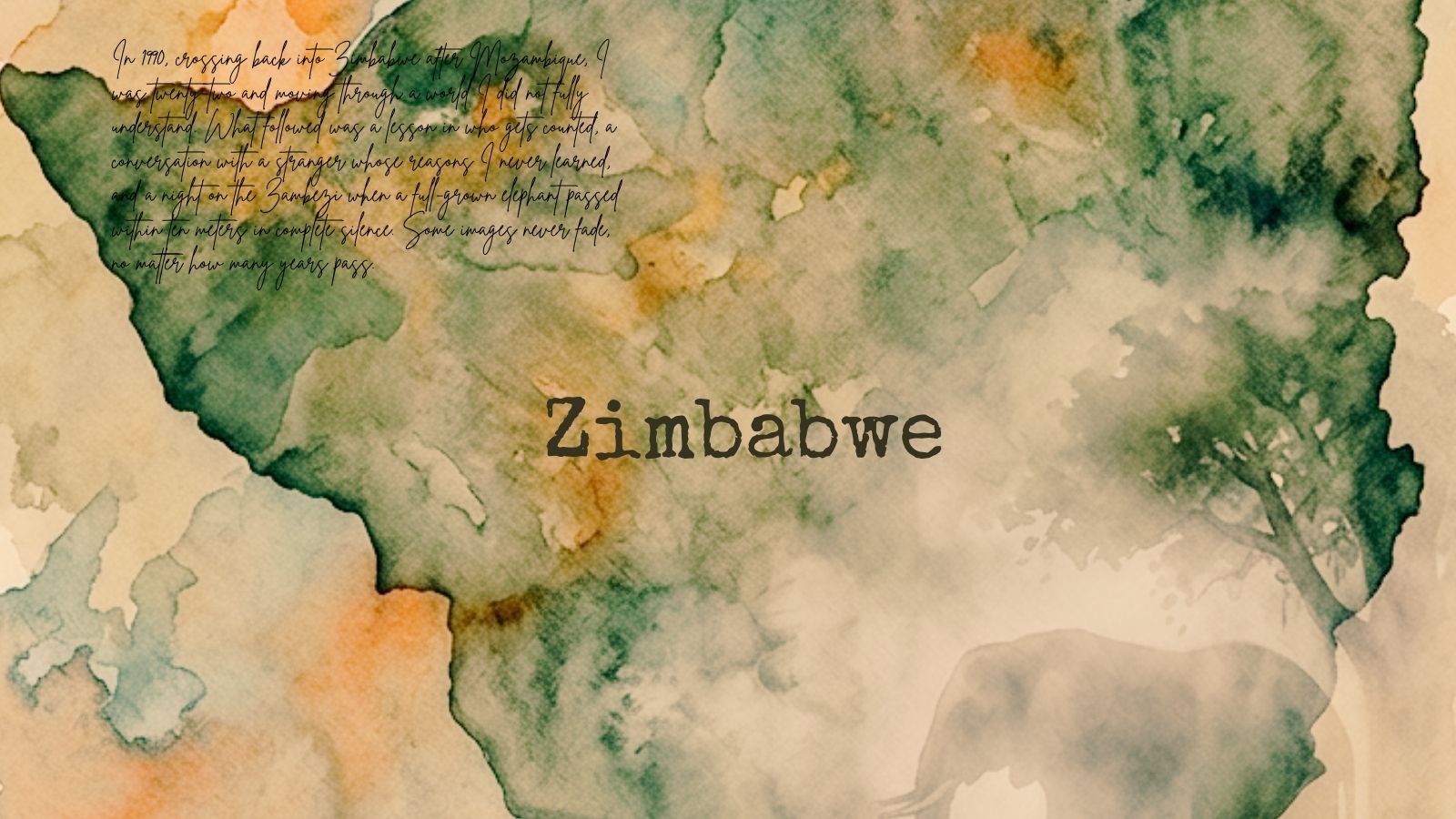
    After some time in Mozambique, crossing back into Zimbabwe felt like stepping into abundance. Markets were full, colors loud, fruit piled high in ways that felt almost theatrical after the dry austerity of the road behind me. The air carried a sense of movement, of possibility. I remember thinking that this was what relief looked like in physical form. Not dramatic, not loud. Just full tables and people going about their day.

    The Chimanimani Mountains stayed with me longer than most landscapes do. There was something deliberate about them, as if they had chosen to be there rather than simply ended up there. The light moved differently across those slopes. Mornings arrived quietly, without announcement, and the evenings seemed to fold themselves neatly into darkness.

    Advertisement

    At the hotel, I met white farmers who had left after Mugabe came to power. They told stories of departure with a strange mix of grievance and nostalgia. One of them mentioned that they had ended up in the United Arab Emirates, making moonshine of all things. That took a moment to process.

    We talked about Bulawayo. I asked how big the city was. Five thousand, one of them said casually. That puzzled me. I had imagined a place much larger.

    Oh, you mean those, he clarified when he saw my confusion.

    Those. The word hung there, stripped of decoration. It did not take long to understand that in his arithmetic, people who were not pink did not count as people at all. It was not shouted, not defended, not argued. Just stated, as if it were an obvious truth. I remember my quiet unease settling in. It became harder to relate to the stories I heard. Who was visible and who had been made invisible long before I arrived?

    Bulawayo itself faded quickly. But I met an American there whose company stayed with me. He said little about himself, and I was never quite sure what had brought him there. I did not ask. Yet somewhere in the conversation, the idea that life could unfold far outside familiar expectations began to feel less like a thought and more like a possibility.

    Advertisement

    Victoria Falls took my breath away in a way I had not thought possible. The scale refused to fit into the mind. The water did not simply fall. It roared, surged, and insisted on being noticed. Mist climbed into the sky like smoke from a fire too large to contain. Standing there felt less like sightseeing and more like witnessing something that existed entirely on its own terms.

    Later, after Kariba Lake, we took a canoe onto the Zambezi. The water moved slowly enough to feel calm, but never still. We swam in the river despite crocodiles and tiger fish, a decision that made sense only if you ignore logic and thrive on borrowed confidence. Our guide carried a calm that felt earned rather than performed. I trusted him because he moved like someone who understood the river, not someone trying to impress it.

    One night, deep in the dark, the guide woke me. Quietly, without urgency. He asked me to move a little to the side of the tree where I was sleeping. Just enough so I could see.

    On the other side stood a full-grown elephant.

    Not ten meters away. Massive. Still. And completely silent.

    I waited for the sound that should have followed something of that size. A step. A shift. The crack of a branch. But there was nothing. No vibration in the ground. No sound in the air. It did not walk so much as glide, moving slowly past the tree and into the darkness again, as if weight did not apply to it.

    Advertisement

    It stunned me more than it frightened me. Something that large should announce itself. Should demand attention. Instead, it moved as if it had no weight at all.

    One of those images that never fades, no matter how many years pass.

    I lay awake afterward, listening to the darkness settle again.

    This is the second part of a journey that began in Mozambique. The first part is here: Edges of the Journey

  • Renting My Own Life

    Renting My Own Life

    I Didn’t Sign Up to Financialize My Life

    I used to buy music. LPs, CDs, and the occasional downloaded file. Once I paid, it was mine. I could listen whenever I wanted. Then it shifted to streaming. Spotify and Apple Music made it effortless. Millions of songs are available instantly. No shelves. No collection to browse. Buying music had been a ritual. Discovering something. Bring it home. Playing it for people I cared about. That ritual is gone. I still have music, but it lives on devices and behind passwords now. It is harder to share and easier to lose.

    Advertisement

    This was sold as progress, but it does not feel like it. I miss record stores and buying something to keep. I resent having to pay continuously for access to things that used to belong to me. That was my first experience of the shift from ownership to permission. It did not stop with music. Movies moved to streaming, and software followed. Companies stopped selling tools and started leasing them. Miss a payment, and the tools stop working.

    Convenience became conditional.

    Ownership faded before I fully noticed. I stopped buying things and started managing subscriptions instead. One by one, small monthly charges became permanent financial background noise.

    Somewhere along the way, this strategy was renamed the sharing economy. A name that still bothers me. Sharing used to mean lending something to someone I knew. It was personal and informal. It was built on trust. Now sharing means platforms, unreadable contracts, and ratings that determine whether I am allowed to participate.

    Advertisement

    Companies like Uber and Airbnb were sold as revolutionary. The promise was freedom and opportunity. Earn extra income. Be your own boss. Cars became businesses. Homes became income streams. Spare time became labor. The promise of freedom and the reality of obligation are not unique to these platforms. It shows up wherever systems are designed to serve capital first and people second.

    Risk moved downward from companies to individuals, wrapped in friendly language. Subscriptions were never really about access. They were about predictability for the provider. Stable revenue. Reduced risk. Long-term control.

    I accepted it for convenience. The cost was a recurring obligation. Freedom slowly began to feel like dependence. This is the sharing economy. Less about sharing and more about renting personal belongings to strangers through apps that take a cut.

    When the commodity is you

    The sharing economy did not stop at things. It moved on to people. Uber described itself as a platform connecting drivers and riders. In practice, it turned personal vehicles into commercial assets while shifting insurance, maintenance, and depreciation to individuals. The car was repurposed, not really shared.

    Airbnb followed the same pattern. The spare room became managed inventory. Hosts coordinated cleaners, monitored reviews, and adjusted pricing to algorithms. The home, the one place a person is supposed to control, became a small business.

    Then the same logic moved further. Surrogacy agencies and egg donation brokers adopted similar structures. The language softened the transaction: compensation instead of payment, journey instead of contract. A body became a service. Biology entered the marketplace.

    Content creation followed, dressed up as self-expression. Platforms promised that anyone could build an audience and make a living. Some people do. But the demands are relentless. Post constantly. Track engagement. Adjust to algorithm changes.

    Personality becomes product. Attention becomes inventory. Platforms take a cut and control the relationship with the audience. Change the algorithm, and years of effort can collapse overnight. This pressure to perform for an algorithm is not unique to creators. It shows up wherever platforms interact with people, including the professional networks we use to manage our careers. The creator carries the risk while the platform keeps the margin.

    I am not arguing that everyone participating in these systems is exploited. People make choices, and sometimes the income matters. What concerns me is the structure. It makes these arrangements feel natural while quietly moving risk downward and profit upward.

    Advertisement

    The word I keep hearing is flexibility. Flexible income. Flexible hours. Flexible commitments. In practice, flexibility belongs to the platform. They summon labor when needed and discard it when not. For the worker, flexibility tends to mean instability. The logic has no clear stopping point. Each new platform finds another part of life to turn into a transaction.

    This is not a sharing economy. Sharing implies reciprocity and trust. What I see instead is a rental economy with warmer language. Platforms control the relationship. They capture the margin. Individuals carry the risk. It is not empowerment. It is not freedom.

    I am a platform’s revenue source.

    AI Transparency Statement for “Renting My Own Life”: The author defined all core concepts, direction, and parameters for this work. In the writing of this article, “Renting My Own Life,” AI assisted in drafting some text, conducting research, and creating visualizations elements. The AI tools used include ChatGPT, Claude, and Gemini. All AI-generated content was thoroughly reviewed and verified for accuracy and appropriateness. The final work reflects human judgment, expertise and experience.

  • The LinkedIn Nudge

    The LinkedIn Nudge

    LinkedIn nudged me today. “Connect with an Executive Director.” It arrived the way these things often do, a small suggestion wrapped in polite certainty, as if it knew something true about my life that I had somehow forgotten.

    What struck me was not the recommendation itself, but the confidence behind it. The platform assumed this is the direction I should be moving in. This is the kind of person who should matter to me. My career path is incomplete without one more important title orbiting my profile.

    Advertisement

    It felt familiar. I have heard this quiet push in classrooms, offices, airport lounges, and hotel corridors. The soft encouragement to climb rather than root. To collect impressive contacts rather than meaningful relationships. To treat ambition as only the need to dominate.

    I could almost hear the old script humming underneath. Success is vertical. Competence equals prestige. Leadership sits on the highest floors. It is a worldview that never took root in me. What stayed was the habit of pushing back, the slow practice of choosing another direction every time it appeared.

    Still, the nudge unsettled me. Not because I believed it, but because part of me paused. A small reflex trained to see value in proximity to power. As if being connected to high-profile executives somehow enriches my life, as if their prominence spills competence into my days through a digital connection.

    The algorithm may not feel malice, but it follows a logic that treats my attention as something to be extracted. It reflects a worldview that has been normalized for so long that I occasionally get caught up in it. Like it is a commonsense approach. Upward is better. Bigger is wiser. Titles are proof.

    Advertisement

    My life has taught me something else. The people who shaped me rarely had impressive job titles. The moments that changed my thinking never came from prestige. The growth I value has less to do with climbing and everything to do with curiosity and caring.

    So I ignored the suggestion. Not out of rebellion. Well, maybe a bit, but my ambitions cannot belong to platforms or hierarchies. They come from the places I have lived, the choices I have made, and the people who keep me grounded. None of that looks like a LinkedIn profile.

    Maybe that is the real story behind my reaction to the nudge. Not the algorithm’s intention, but the reminder it accidentally gives. The recognition that what constitutes success for the algorithm does not fit my understanding of what success should be.

    AI Transparency Statement for “The LinkedIn Nudge — Choosing Roots Over the Climb”: The author defined all core concepts, direction, and parameters for this work. In the writing of this article “The LinkedIn Nudge — Choosing Roots Over the Climb,” AI assisted in drafting text, and editing and refinement. The AI tools used include ChatGPT and Claude. All AI-generated content was thoroughly reviewed and verified for accuracy and appropriateness. The final work reflects primarily human judgment and expertise.